Security Testing Strategy
Select and implement a layered security testing strategy for a codebase: design unit tests for security properties (boundary conditions, negative inputs, access control invariants), set up integration testing with non-production seed data (avoiding the production data copy anti-pattern), choose and configure dynamic analysis sanitizers (AddressSanitizer for memory corruption, ThreadSanitizer for race conditions, MemorySanitizer for uninitialized reads — with their performance cost tradeoff accounted for in CI/CD scheduling), plan fuzz testing (write effective fuzz drivers using libFuzzer/AFL, apply dictionary inputs for structured formats like HTTP/SQL/JSON, build a seed corpus, integrate continuous fuzzing via ClusterFuzz or OSS-Fuzz), and integrate static analysis at the right depth for each development stage (linters in the IDE commit loop, abstract interpretation nightly, formal methods for safety-critical paths). Use when creating a security testing plan for a new service, setting up fuzz testing for a parser or protocol implementation, integrating static analysis into a CI/CD pipeline, adding sanitizer-enhanced nightly builds, or auditing coverage gaps found during secure-code-review. Produces a security testing strategy document with tool selection rationale, CI/CD integration plan, and coverage priorities derived from code review findings.
 View on ClawhHub
Install
What You'll Need
Skill Relationships
Unlocks
No dependent skills
Requires
Source Book
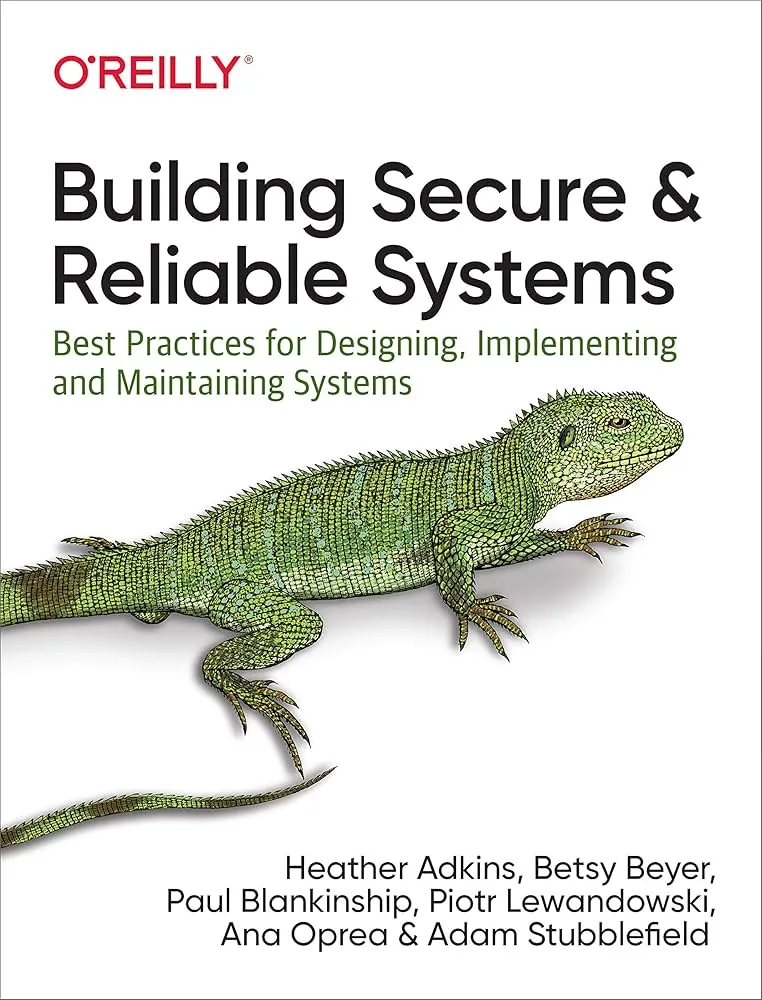
Building Secure and Reliable Systems
Heather Adkins, Betsy Beyer, Paul Blankinship, Piotr Lewandowski, Ana Oprea, Adam Stubblefield