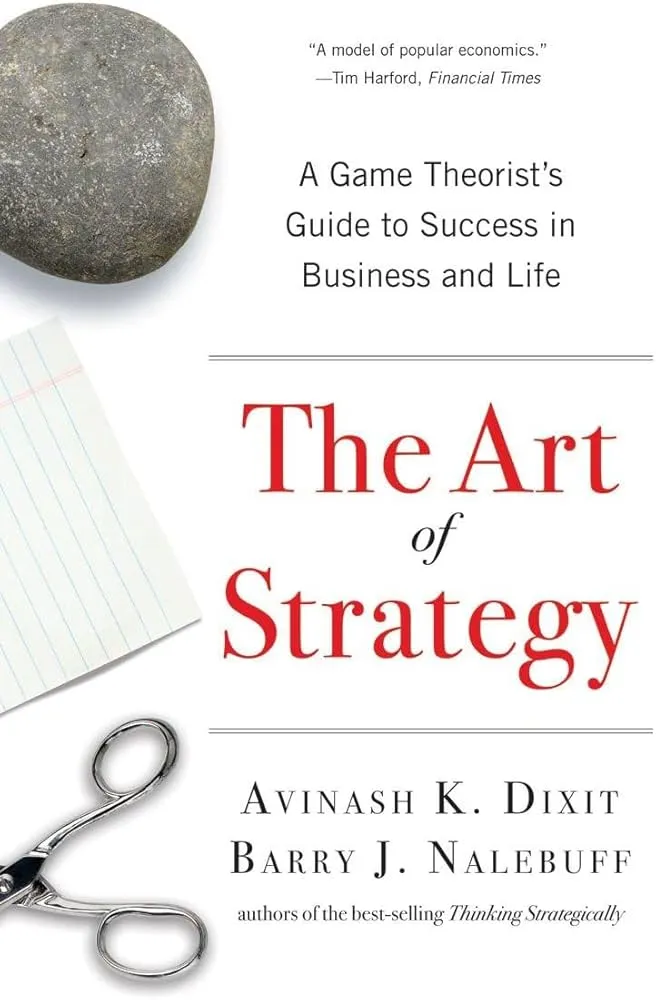
Backward Reasoning Game Solver

Solve sequential-move strategic games using backward induction. Use this skill when a user faces a multi-stage decision or negotiation where players alternate moves and each person's best action depends on what others will do later. Triggers include: user needs to determine the optimal opening move in a turn-based game or negotiation; user wants to know whether they can guarantee a win or favorable outcome before the game starts; user must sequence two risky actions and does not know which to attempt first; user is analyzing a multi-stage political, business, or competitive scenario where one party moves, the other responds, and so on; user has a finite-horizon sequential game with known player preferences and needs the game-theoretic solution; user suspects their opponent can anticipate their moves and wants to reason from end-states backward to their first action; user is building a game tree and needs to prune it to find dominant paths; user has a combinatorial takeaway game (like Nim variants) and wants the winning-position formula; user needs to understand why more flexibility or options can paradoxically hurt a player in a sequential game. This skill handles perfect-information, finite, sequential-move games. It does NOT cover simultaneous-move games (use a separate Nash equilibrium skill), incomplete-information games, or infinite-horizon repeated games.

What You'll Need

ReadWrite

Skill Relationships

Requires

No prerequisites — this is a foundation skill

Install

1. Add marketplace
/plugin marketplace add bookforge-ai/bookforge-skills
2. Install plugin
/plugin install the-art-of-strategy@bookforge-skills
3. Use the skill
/backward-reasoning-game-solver
CC-BY-SA · Open sourceGitHub

More from The Art of Strategy

Game Theoryfull

Auction Bidding Strategist

Apply the complete game-theoretic auction framework to determine the optimal bid in any auction format. Use this skill when a user is preparing to bid in an English (ascending) auction, a Japanese auction, a Vickrey (second-price sealed-bid) auction, a Dutch (descending-clock) auction, or a standard sealed-bid first-price auction, and wants the game-theoretically correct strategy rather than guesswork. Triggers include: user is deciding how much to bid in a competitive tender, procurement auction, real estate auction, eBay auction, spectrum license auction, or corporate acquisition; user is worried about overbidding and wants to know how to set a ceiling; user suspects they may be falling into the winner's curse — winning but regretting the price paid; user must classify whether the auction involves private values (each bidder's value is independent) or common values (the item has a single underlying value that all bidders are estimating), because the correct strategy differs sharply between the two; user is evaluating whether to participate in a dollar auction, bidding war, or war-of-attrition-style competitive spending contest and wants to know when to stop or avoid; user needs to shade a bid below their true value in a sealed-bid first-price format and wants the formula; user is designing an auction and wants to know which format will yield more seller revenue; user is bidding in multiple simultaneous auctions and needs to think across the games. This skill does NOT cover multi-round negotiation without a defined auction structure (use a negotiation skill instead), combinatorial auctions with complex package bids, or procurement auctions requiring cost estimation.

Game Theoryfull

Information Asymmetry Strategist

Diagnose and resolve information asymmetry in strategic interactions using four mechanisms: signaling, screening, signal jamming, and countersignaling. Use this skill when a user needs to credibly communicate private information to an uninformed counterpart; when a user needs to elicit honest information from a better-informed counterpart without being able to verify their claims; when a user suspects they are on the receiving end of signal jamming or adverse selection and wants to see through it; when a user is designing a pricing scheme, contract structure, hiring process, or product menu and needs to induce self-selection among different customer or candidate types; when a user wants to know whether to signal their quality, countersignal by staying silent, or jam an opponent's signals; when a user needs to apply Bayes' rule to update beliefs after observing an opponent's action in a mixed-strategy game; when a user faces Akerlof-style market collapse risk and wants to identify signaling or screening remedies; when a user is designing a menu of options (e.g., airline fare classes, insurance deductibles, product tiers) and needs to check participation constraints and incentive compatibility constraints. This skill handles both directions of information asymmetry: the informed party communicating outward (signaling, countersignaling, jamming) and the uninformed party extracting information inward (screening, adverse selection management). It does NOT cover moral hazard or principal-agent problems after a contract is signed, nor does it handle simultaneous-move games without information asymmetry (use the Nash equilibrium skill for those).