Class Responsibility Realignment
Redistribute methods and fields to the classes that own them, repair broken inheritance hierarchies, and extend unmodifiable library classes. Use when: a method uses another class's data far more than its own (Feature Envy — the method belongs in the other class); a single logical change forces edits across many files (Shotgun Surgery — scattered behavior needs consolidation); a class delegates half or more of its methods without adding value (Middle Man — remove the hollow layer or collapse it into inheritance); two classes share too much private knowledge about each other (Inappropriate Intimacy — separate the entangled pieces); a recurring group of fields travels together across class boundaries (Data Clumps — extract the group into its own class); a class has grown to serve two distinct responsibilities that change for different reasons (Extract Class — split it); a class that used to have a purpose has been refactored down to almost nothing (Inline Class — absorb it into its most active collaborator). For inheritance hierarchies: move common behavior upward (Pull Up Method, Pull Up Field) when subclasses duplicate it; push specialized behavior downward (Push Down Method, Push Down Field, Extract Subclass) when only some subclasses need it; create a shared abstraction over two similar but unrelated classes (Extract Superclass); extract a protocol-only contract (Extract Interface) when clients use only a subset of the class; merge a hierarchy that has converged (Collapse Hierarchy); move similar-but-not-identical subclass methods into a common template (Form Template Method); swap inheritance for delegation (Replace Inheritance with Delegation) when a subclass uses only part of the superclass interface or inherits inappropriate data; swap back (Replace Delegation with Inheritance) when the delegation covers the full interface and adds no control. For unmodifiable library classes: add one or two methods as foreign methods in the client class; add many methods via a local extension (subclass or wrapper). Decision rule for encapsulation balance: Hide Delegate to shield clients from internal structure; Remove Middle Man when the delegating layer has grown hollow. Decision rule for inheritance vs delegation: use Extract Subclass when variation is fixed at construction time and single-dimensional; use Extract Class (delegation) when variation is runtime-flexible or multi-dimensional — "if you want the class to vary in several different ways, you have to use delegation for all but one of them."
 View on ClawhHub
Install
What You'll Need
Source Book
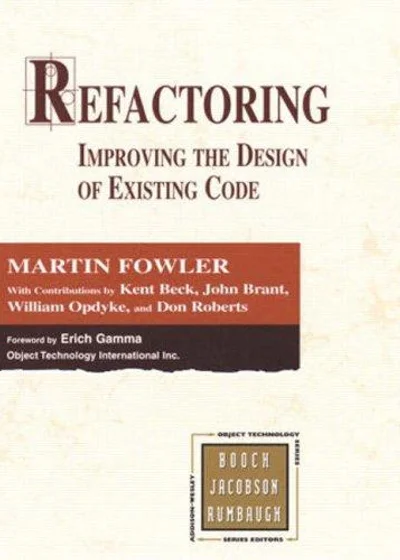
Refactoring: Improving the Design of Existing Code
Martin Fowler