User prepares for negotiations with gut feeling, generic advice, or rational-only frameworks that ignore emotional dynamics. Results in unstructured conversations, premature concessions, and missed leverage.
User has a complete negotiation preparation kit: situation-specific one-sheet with optimistic goal, tactical summary, accusation audit labels, calibrated question bank, and noncash offer list. Each preparation artifact is tailored to their specific counterpart and deal dynamics.
Who This Is For
Experience: beginner-to-intermediate
“salespeople, founders, managers, consultants, anyone preparing for a difficult conversation or deal”
Quality
Problems These Skills Solve
Preparing for high-stakes negotiations without a structured framework
Getting counterparts to reveal hidden motivations and constraints
Handling aggressive or emotional counterparts without escalation
Bargaining on price without arbitrary splitting or premature concessions
Working Environment
 situation-brief.mdstakeholder-map.mdconversation-history.mdcurrent-terms.mdgoals-and-constraints.mdcounterpart-profile.md
Skills operate on user-provided descriptions of negotiation situations — deal terms, stakeholder dynamics, conversation history, goals and constraints. The agent produces preparation artifacts: negotiation one-sheets, calibrated question banks, label lists, accusation audits, Ackerman bargaining plans.
You provide
·situation description, deal terms, conversation history, stakeholder info, goals
How Skills Work Together
Install
Extracted Skills
Accusation Audit Generator
Generate a preemptive objection audit and emotion-label bank before any high-stakes negotiation, difficult conversation, salary discussion, sales pitch, or conflict resolution. Use this skill when you need to defuse anticipated resistance before speaking, prepare labels for counterpart objections before a job offer negotiation, neutralize defensive reactions before presenting bad news, write preemptive acknowledgments before a pitch to a skeptical audience, prepare for a difficult performance review or client escalation, anticipate accusations before a contract renegotiation, build a delivery script for labeling counterpart frustrations, or create an accusation audit for a negotiation one-sheet.
Ackerman Bargaining Planner
Build a complete price-negotiation offer schedule using the Ackerman bargaining model. Use when someone asks "how do I negotiate a lower price?", "what should my opening offer be?", "how do I avoid splitting the difference?", "how do I structure my counter-offers so I don't give too much away?", or "how do I make my final offer feel credible?" Also use for: designing a salary negotiation offer sequence, structuring a vendor price reduction campaign, planning a real estate purchase offer ladder, deciding how far to push on a freelance rate, or building an offer schedule for any purchase or contract negotiation where you are trying to reach a specific target price. Produces a situation-specific ackerman-plan.md with your 4-stage offer sequence showing actual dollar amounts computed from your target price, scripted phrases for each stage, fairness-challenge responses, a noncash item list for the final offer, and anti-patterns to avoid. Works for any negotiation where you are the buyer (or the party making offers). Pair with calibrated-questions-planner (to generate questions to use between offers) and counterpart-style-profiler (to adapt delivery pace and tone).
Black Swan Discovery
Identify the hidden unknowns that will determine whether your negotiation succeeds or fails before you ever make an offer. Use when someone asks "why is my counterpart acting irrationally?", "why does this deal keep stalling for no apparent reason?", "what am I missing about this negotiation?", "how do I find out what the other side really wants?", or "why won't they just say yes when the deal is clearly good for them?" Also use for: diagnosing a stalled sales cycle where the prospect keeps deflecting, investigating why a candidate rejected an offer that seemed strong, uncovering hidden constraints before entering a high-stakes contract renegotiation, mapping leverage before a complex partnership discussion, or rebuilding a broken negotiation relationship. Produces a black-swan-report.md with a hypothesis map of unknown unknowns in all three categories (worldview mismatches, hidden constraints, hidden agendas), a leverage inventory across all three leverage types, and a prioritized bank of investigation questions to surface what you do not yet know. Pair with counterpart-style-profiler (to refine worldview hypotheses by type) and calibrated-questions-planner (to convert investigation questions into a deployment-ready set).
Calibrated Questions Planner
Generate a bank of open-ended strategic questions (how/what questions) for a negotiation, sales conversation, difficult discussion, or conflict situation. Use when someone asks "what questions should I ask in my negotiation?", "how do I get more information without seeming pushy?", "how do I find out who else is involved in this decision?", "what should I ask to understand their constraints?", or "how do I stop the other side from stonewalling me?" Also use for: designing interview questions that reveal unstated priorities, discovering hidden stakeholders who could kill a deal, identifying deal-breaking issues before they surface, uncovering the real decision-making process behind a stated position, or preparing questions for any high-stakes conversation where you need the other party to think and talk. Produces a situation-specific question bank organized by category (value-revealing, behind-the-table stakeholder, deal-killing issue), with follow-up label templates and deployment sequencing. Works for sales calls, job negotiations, vendor negotiations, partnership discussions, client discovery, conflict resolution, and any scenario where understanding the counterpart's full picture is critical. Pair with accusation-audit-generator (to defuse objections before asking) and commitment-verifier (to verify answers reveal real commitment).
Commitment Verifier
Verify whether a counterpart's agreement is a real commitment or a polite escape. Use when someone asks "how do I know if they really mean yes?", "they agreed but I'm not sure they'll follow through", "my counterpart said yes but something feels off", "how do I tell if someone is stringing me along?", or "they said you're right — is that agreement?" Also use for: detecting when a verbal commitment won't survive contact with implementation, distinguishing genuine alignment from social pressure compliance, spotting deception signals in a counterpart's language or delivery, checking whether the decision-maker in the room actually has authority to commit, or preparing verification questions before a closing conversation. Analyzes an agreement interaction — conversation transcript, notes, or recalled exchange — and classifies each yes-type, flags verbal deception indicators, surfaces channel mismatches (words vs. tone vs. body language), and generates Rule of Three follow-up questions to confirm genuine commitment. Works for sales closes, contract negotiations, vendor agreements, hiring decisions, partnership deals, project sign-offs, and any high-stakes conversation where the difference between a real yes and a polite yes determines whether effort is wasted. Pair with calibrated-questions-planner (to design verification questions) and empathic-summary-planner (to build the rapport that makes genuine commitment possible).
Counterpart Style Profiler
Profile a negotiation counterpart's communication style and generate a tailored adaptation strategy. Use when asking "how should I approach this person?", "what communication style does my counterpart prefer?", "why is this negotiation not working?", "how do I adapt to this person's personality in negotiation?", or "what type of negotiator am I dealing with?" Also use for: diagnosing why previous conversations stalled or backfired; identifying whether warmth, data, or directness will land better; assessing self-type to avoid projecting your preferences onto the counterpart; preparing counterpart profiles for a negotiation one-sheet. Classifies counterparts into one of three communication archetypes (Analyst, Accommodator, Assertive) using observable behavioral signals, then produces a specific adaptation strategy covering communication tempo, information delivery, relationship style, and risk areas. Works from conversation history, emails, meeting notes, colleague descriptions, or any observable behavior data.
Empathic Summary Planner
Build an active listening summary and emotional validation script before any negotiation, sales conversation, difficult conversation, conflict resolution, or persuasion attempt. Use this skill when you need to prepare a summary statement that triggers genuine agreement from a counterpart, create a listening script before a high-stakes conversation with an emotionally activated person, draft labels and paraphrasing language before a client call, build rapport with someone before making a request, prepare a stalled negotiation recovery plan using validation techniques, write an empathic opening before delivering difficult feedback, plan the listening sequence before a salary negotiation or sales discovery call, or generate a "that's right" trigger statement that signals real understanding — not just acknowledgment.
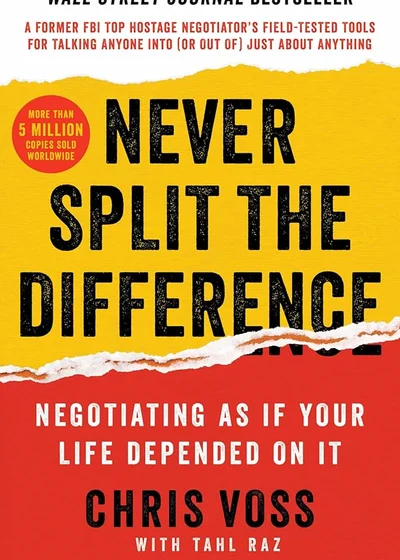
Negotiation One Sheet Generator
Build a complete Negotiation One Sheet — a five-section preparation document that covers your aspirational goal, a counterpart-validating situation summary, a preemptive accusation audit, a calibrated question bank, and a list of noncash offers — before any negotiation, sales conversation, contract discussion, salary negotiation, or difficult ask. Use when you need to prepare for a high-stakes conversation in a single document, when you want to stop improvising and start with a battle-tested preparation framework, when you keep leaving deals on the table by aiming at your bottom line instead of your aspirational target, when you need to combine emotional preparation with offer strategy into one coherent plan, or when you are coaching someone else through a complex negotiation. Also use before any negotiation where you have 20+ minutes to prepare and want to walk in with every major tool loaded: counterpart profile, labels, questions, offer sequence, and noncash options. Produces negotiation-one-sheet.md — a complete, ready-to-use preparation document with all five sections filled. Works standalone with simplified inline processes or in full-depth mode by invoking the seven supporting Level 0 skills. The hub of the Never Split the Difference skill set.